‘Love jihad’ gets a Bengal reply: Bahu
lao, Beti bachao, ‘purify’ Muslim brides

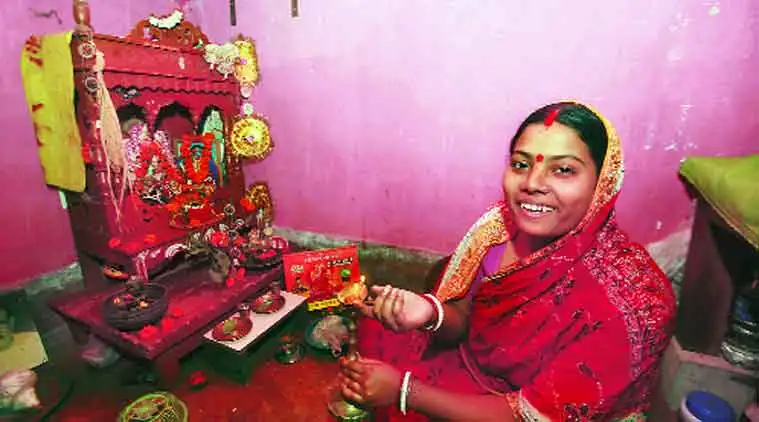
Rebeka Khatun is now Meenakshi Naskar in Lakshminarayanpur,
South 24 Parganas. (Express Photo by: Subham Dutta)
The din over the
‘ghar wapsi’ reconversion campaign in the north and west may have dropped many
decibels after Prime Minister Narendra Modi underlined “the undeniable right”
of an individual’s choice of religion. But in the east, the RSS and its
affiliates are experimenting with another conversion programme — where, instead
of hounding a Hindu-Muslim couple, they are actively facilitating their union.
The only condition: the bride, in this case, is a Muslim who becomes a Hindu after a “suddhikaran” (purification)
programme.
In West Bengal,
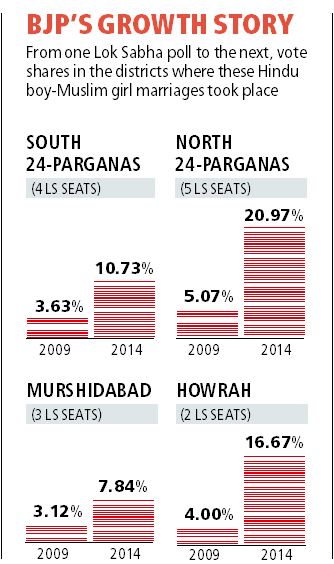
especially in districts where the BJP has made significant electoral gains — at
the expense of a crumbling Left and Congress — the Hindutva brotherhood, from
Vishwa Hindu Parishad to Hindu Samhati, Hindu Jagran Manch to Bharat Sevashram Sangha, have stepped
up a campaign they call “Bahu lao, Beti
bachao” (bring a daughter-in-law, save a daughter), saying this is their answer
to “love jihad.”
In sharp contrast to
their hounding of Hindu woman-Muslim man couples, these groups actively
“shelter, arrange” the marriage of Hindu man-Muslim woman couples.
RELATED
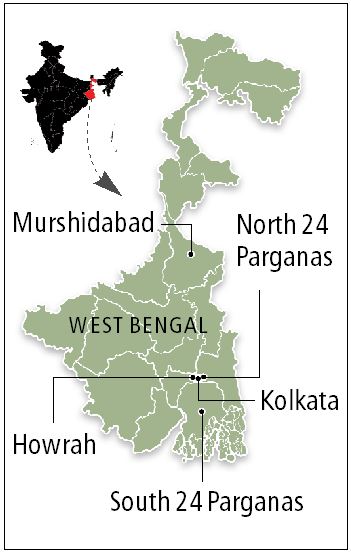
Over two months, The Indian Express travelled through South 24 Parganas,
North 24 Parganas, Murshidabad, Howrah and Birbhum — the rise of the BJP in
these areas has coincided with the spread of this campaign — and met several
couples who openly credit the Hindu groups for their marriage.
VHP leader Badal Das,
who is in charge of his organisation’s role in the campaign, estimates that at
least 500 Muslim and Christian women have “become Hindus through marriage” in
the last one year.
All women have adopted Hindu names and their families have been “advised” to join
the BJP for their “own safety”.
Hindu Samhati chief
Tapan Ghosh said they were “fighting the menace called love jihad… Muslim boys
trap Hindu girls into marriage… our effort is to rescue the victims of love
jihad and bring Muslim girls to Hindu homes”.
Achintya Biswas,
Jadavpur University professor who heads the VHP goldenjubilee celebrations committee, said: “If a
Hindu boy can reconvert a Muslim girl to Hinduism, it is considered a pious
act. We want to break this trend of a Hindu girl getting married to a Muslim
boy.”
One such woman who had
to undergo “suddhikaran” to become a Hindu is 21-year-old Rebeka Khatun,
now Meenakshi Naskar. She lives in Lakshminarayanpur, South 24 Parganas.
She does not respond
immediately if you call out Renu, her nickname, or Meenakshi. She was
given these names by her husband’s parents and the Hindu Samhati
which arranged her marriage to Madhumangal Naskar last year. They married
“after one year of courtship”.
Madhumangal’s father,
Haradhan Chandra Naskar, did not object. He and his familyjoined the BJP. Her father, Mosaraf
Sheikh, was also told to join the party for the “safety and security” of the
couple.
“I was told to convert
to Hinduism if I wanted to marry him. I eloped since my community would have
never allowed a Muslim girl to marry a Hindu boy. Madhumangal approached the
Hindu Samhati. They assured us they would settle everything if I converted to
Hinduism. I agreed,” she said.
 “We were kept in a shelter in Kolkata by the
Hindu Samhati. After a few months, I came here. I declared myself a Hindu and
submitted an affidavit. His parents organised a ‘havan’ for my ‘suddhikaran’
(purification). I married him as per Hindu rituals,” she said.
“We were kept in a shelter in Kolkata by the
Hindu Samhati. After a few months, I came here. I declared myself a Hindu and
submitted an affidavit. His parents organised a ‘havan’ for my ‘suddhikaran’
(purification). I married him as per Hindu rituals,” she said.
Father-in-law
Haradhan, the village healer, said: “I asked her father to remain on good terms with the BJP. I was a member of SUCI but I am now in the
BJP. Her father comes to meet her at night since others in the village might
not approve.”
Father Mosaraf Sheikh
said: “Initially, we resisted. But my daughter eloped and embraced Hinduism.
She is happy now.”
Sabina to Nandini, Kashmira to Kavita,
Rukaiya to Rumpa, Roshna to Jyotsna…
…
And other converted brides with new names. Madhuparna Das travels to 4
Bengal districts and finds out how Hindu groups sheltered and ‘purified’ these
Muslim women before marriage to Hindus
Sister
married a muslim, brother ‘paid them back’
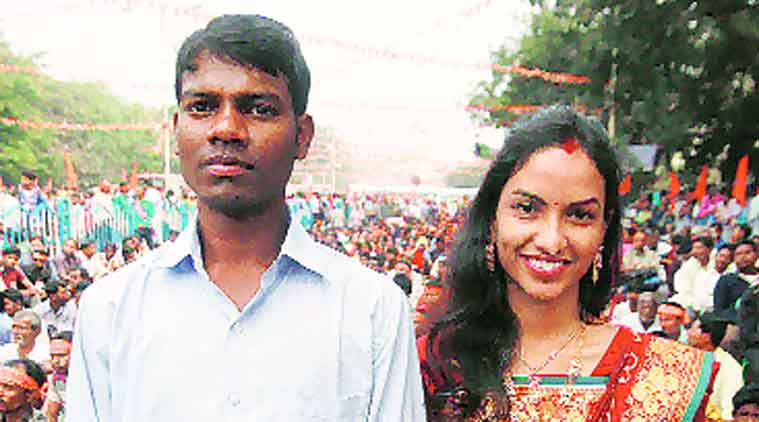
Ummekulchum Khatun, 22, now Antara Bachar

Ummekulchum married Rajshekhar Bachar, an RSS worker from Sundarban village in Minakhan, North 24-Parganas. He said he contacted Tapan Ghosh of Hindu Samhati and was told to go ahead. The bride converted to Hinduism after she eloped. The suddhikaran was facilitated by Ghosh, she says. “I call him my Baba. Without him, we would not have survived. My family would have taken me back forcibly. I am very happy now.”
Rajshekar runs a foodstall. “I was a student of Nimpith Ramkrishna Ashram. One of my sisters married a Muslim youth. But after she converted to Islam, she was confined to her house. She was never allowed to leave home. Her husband is my wife’s cousin. I paid them back in the same coin,” he said.
Ummekulchum Khatun, 22, now Antara Bachar
Ummekulchum married Rajshekhar Bachar, an RSS worker from Sundarban village in Minakhan, North 24-Parganas. He said he contacted Tapan Ghosh of Hindu Samhati and was told to go ahead. The bride converted to Hinduism after she eloped. The suddhikaran was facilitated by Ghosh, she says. “I call him my Baba. Without him, we would not have survived. My family would have taken me back forcibly. I am very happy now.”
Rajshekar runs a foodstall. “I was a student of Nimpith Ramkrishna Ashram. One of my sisters married a Muslim youth. But after she converted to Islam, she was confined to her house. She was never allowed to leave home. Her husband is my wife’s cousin. I paid them back in the same coin,” he said.
Sheltered
and given a job
Ispa Naiya, 20, now Chhanda Sardar
Ispa Naiya, 20, now Chhanda Sardar
 She runs a small tailoring shop in Mandirbazar, South
24-Parganas. The Hindu Samhati helped open the shop. She eloped with Chandan
Sardar when she was a little under 18. The Samhati sheltered her until she
became an adult. “His parents did not accept me but came around later. My
father filed a complaint against us. I lodged a counter-complaint against him.
Both cases are still on. My life has changed but I am happy,” she said. The
Hindu Samhati arranged a job for her husband as a guard with a private company. “They met my family and told them marrying a Muslim girl was a service to Hinduism,” Chandan said.
She runs a small tailoring shop in Mandirbazar, South
24-Parganas. The Hindu Samhati helped open the shop. She eloped with Chandan
Sardar when she was a little under 18. The Samhati sheltered her until she
became an adult. “His parents did not accept me but came around later. My
father filed a complaint against us. I lodged a counter-complaint against him.
Both cases are still on. My life has changed but I am happy,” she said. The
Hindu Samhati arranged a job for her husband as a guard with a private company. “They met my family and told them marrying a Muslim girl was a service to Hinduism,” Chandan said.
‘They
told me I should return to my original religion’
Nirupa Sultana, 23, now Rupa Konra

A second-year college student, she converted to Hinduism on October 17, 2014. She now lives with husband Gopal Konra in Sankrail, Howrah. “I fell in love with Gopal Konra but lacked the courage to give up my religion. I was taken to Tapan Ghosh of Hindu Samhati and he told me my original religion was Hinduism and I should return to it, spend my life with my love. I ran away from home and lived in a shelter. I am happy now. I go to college everyday. My family has disowned me. I have accepted that too,” she said.
Nirupa Sultana, 23, now Rupa Konra
A second-year college student, she converted to Hinduism on October 17, 2014. She now lives with husband Gopal Konra in Sankrail, Howrah. “I fell in love with Gopal Konra but lacked the courage to give up my religion. I was taken to Tapan Ghosh of Hindu Samhati and he told me my original religion was Hinduism and I should return to it, spend my life with my love. I ran away from home and lived in a shelter. I am happy now. I go to college everyday. My family has disowned me. I have accepted that too,” she said.
Both
her names mean the same, VHP ‘uncle’ told her
Roshna, 20, now Jyotsna
Roshna, 20, now Jyotsna
She married
30-year-old Biswajit Sarkar, a farmer in a village near Baharampur in
Murshidabad district. Roshna had to undergo suddhikaran in July 2014. Husband
Biswajit switched loyalties from the Trinamool Congress to the BJP.
“We were kept in a VHP shelter. They facilitated our marriage and helped my family. I did not want to change my name. But the VHP jethu (uncle) told me Jyotsna and Roshna mean the same —moonlight,” she said. Father Aminuddin Sheikh lodged a case against her. Husband Biswajit said: “I liked her a lot but I was scared of the communal angle. Since I lived in a place where the minority were in majority, I was hesitant. But the VHP supported me and took us to a shelter. Once things settled, we returned home.”
“We were kept in a VHP shelter. They facilitated our marriage and helped my family. I did not want to change my name. But the VHP jethu (uncle) told me Jyotsna and Roshna mean the same —moonlight,” she said. Father Aminuddin Sheikh lodged a case against her. Husband Biswajit said: “I liked her a lot but I was scared of the communal angle. Since I lived in a place where the minority were in majority, I was hesitant. But the VHP supported me and took us to a shelter. Once things settled, we returned home.”
Meet the Parivar behind
these marriages

Sachindra Sinha, VHP
From Vishwa Hindu
Parishad to Hindu Samhati, Bharat Sevashram Sangha to Hindu Jagran Manch, a
common thread binds them all — a campaign to counter ‘love jihad’ across West
Bengal. Calling it the “bahu lao, beti bachao” campaign, these organisations
have been urging Hindu young men to bring home Muslim or Christian brides while
“protecting Hindu girls from falling in love or getting married to Muslim,
Christian boys”.
And they speak in
chorus: “It is a fight against the menace of love jihad. By going in for such a
marriage, a Hindu boy is doing a service to society.”
Vishwa
Hindu Parishad
Badal Das is in charge
of the VHP contribution to the “bahu lao, beti bachao” campaign which he says
is part of their paribartan programme. He said at least 500 Muslim and
Christian women converted to Hinduism “legally and religiously” after marrying
Hindu men in the last one year, and the programme was “most successful” in
Bengal.
Sachindra Sinha, in
charge of the VHP state unit, said: “We have also intensified social activities
to push for an anti-conversion law.”
Jugal Kishoreji, VHP
general secretary in charge of Dharm Prasar, said: “If a Hindu boy marries a
Muslim girl, we make her undergo suddhikaran (purification). Their children
will be Hindus. So it is a service to society.”
Achintya Biswas,
professor at Jadavpur University and president of the VHP golden jubilee
committee, said: “Since there is a friendly government at the Centre, we are
working comfortably. Our leaders have directed us to remove caste lines in
Hindu society, be involved in marital ties. If a Hindu boy can reconvert a
Muslim girl to Hinduism, it is considered a pious act. We want to break this
trend of a Hindu girl getting married to a Muslim boy.”
Hindu
Samhati
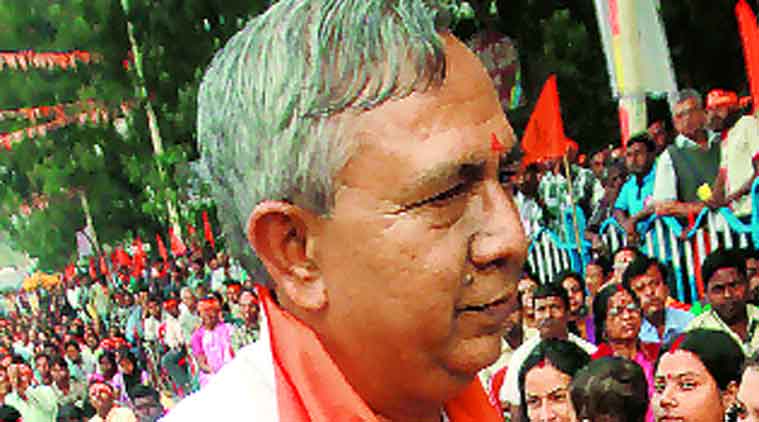 Tapan Ghosh, Hindu Samhati
Hindu Samhati founder
Tapan Ghosh was an RSS leader once. He floated his outfit when he thought the
RSS was being “soft”. Ghosh said the Hindu Samhati was “fighting the menace
called love jihad”.
“Society is in peril.
We are fighting against atrocities on Hindu families. Hindu girls are being
made victims of love jihad. Muslim boys trap Hindu girls into marriage. Love
jihad has become a tool to traffic Bengali Hindu girls to West Asia. Our effort
is to rescue the victims of love jihad and bring Muslim girls to Hindu homes,”
he said.
The Hindu Samhati has
the same approach as the VHP — conversion through marriage. Women who undergo
suddhikaran never file an FIR, so there is no case of forcible conversion, he
said. “We do not force people to convert. We help those who wish to get
converted. This is a great service to the country and Hindu society,” he said.
Bharat
Sevasharam Sangha
 Swami Gurupadananda, Bharat Sevashram Sangha
The Bharat Sevashram Sangha too has been facilitating the
marriage of Muslim girls to Hindu boys. It has set up more than 300 Hindu Milan
Mandirs across the state for such marriages and suddhikaran. South 24-Parganas
has 45 such mandirs.
Swami Guruparananda, chief organiser of
the central Hindu Milan Mandir, said: “Spreading awareness among Hindu and
Muslim girls is very important. If married to Muslim youths, girls have to give
birth to several babies. The reason is not sexual, but political. Muslims want
to increase their population. But if a Muslim girl converts to Hinduism, she
lives a normal life in a liberal society.”
He prefers to use the term reconversion.
“We only perform rituals for the suddhi of those who are becoming Hindus.” He
said he performed suddhi rituals on 108 Muslim girls in two years. “This was
only after the girls submitted affidavits, declaring change of religion and
names. Other Hindu groups facilitate the legal process while we perform Vedic
rituals.”


